Weekend Studios
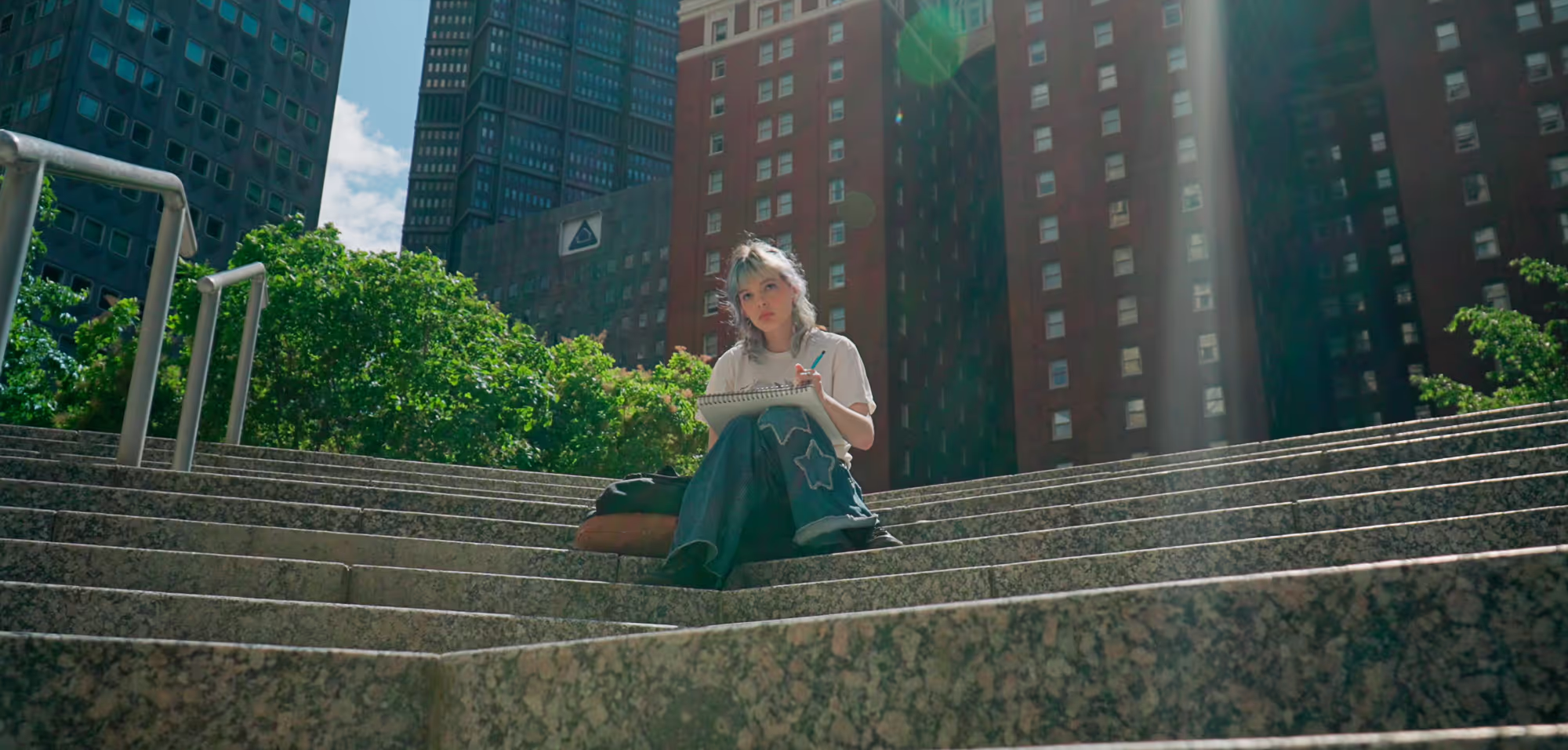
We were nearing the end of our 12 hour single day production, and the sun was setting faster than we expected (or maybe we were running behind, but either way), we had two scenes left, no lighting rigs, and one of those scenes depended entirely on capturing the sunset.
A lot of times, great cinematography isn’t about gear, but about choices. And sometimes in low-budget independent filmmaking, the choices may not even be about the shot, but about convincing the director to reschedule the day last minute to get a crucial shot, even if that means you have to rethink the script just a little – but that’s the writer’s problem, and when in production, we just need to get that shot.
This is what we had to do for Plant; a short, independent film, shot entirely in 12 hours, in one day. That decision sent us rushing to Grandview Overlook Park in Mount Washington, Pittsburgh. As we arrived, the clouds parted, and the last rays of sunlight perfectly lit our protagonist, and we were able to get this iconic shot.

In low-budget independent filmmaking, you don’t always get the shot you imagined. There’s no lighting rigs. No controlled set. No neatly dressed frame. You’re chasing moments in real time; in public, in shifting light, in spaces that don’t wait for you to be ready. The sun moves. Clouds roll in. Strangers cross your composition. And the anamorphic lenses you wish you had are somewhere far outside your budget.
But what you do have is your creativity, agility, and a whole lot of luck (hopefully).
When we chose to film this short in Pittsburgh, we didn’t arrive with a strict storyboard to impose on the city. We arrived ready to be inspired by it. The bridges, the steel, the steep streets, the shifting sky, the surprising pops of nature within the city, they weren’t just backdrops. They shaped our angles, influenced our blocking, and quietly rewrote scenes as the day unfolded. Over a single 12-hour shoot, the city became less of a location and more of a co-author, and we let it guide the story in ways we couldn’t have planned.
Without equipment to rely on, composition became our primary storytelling tool.
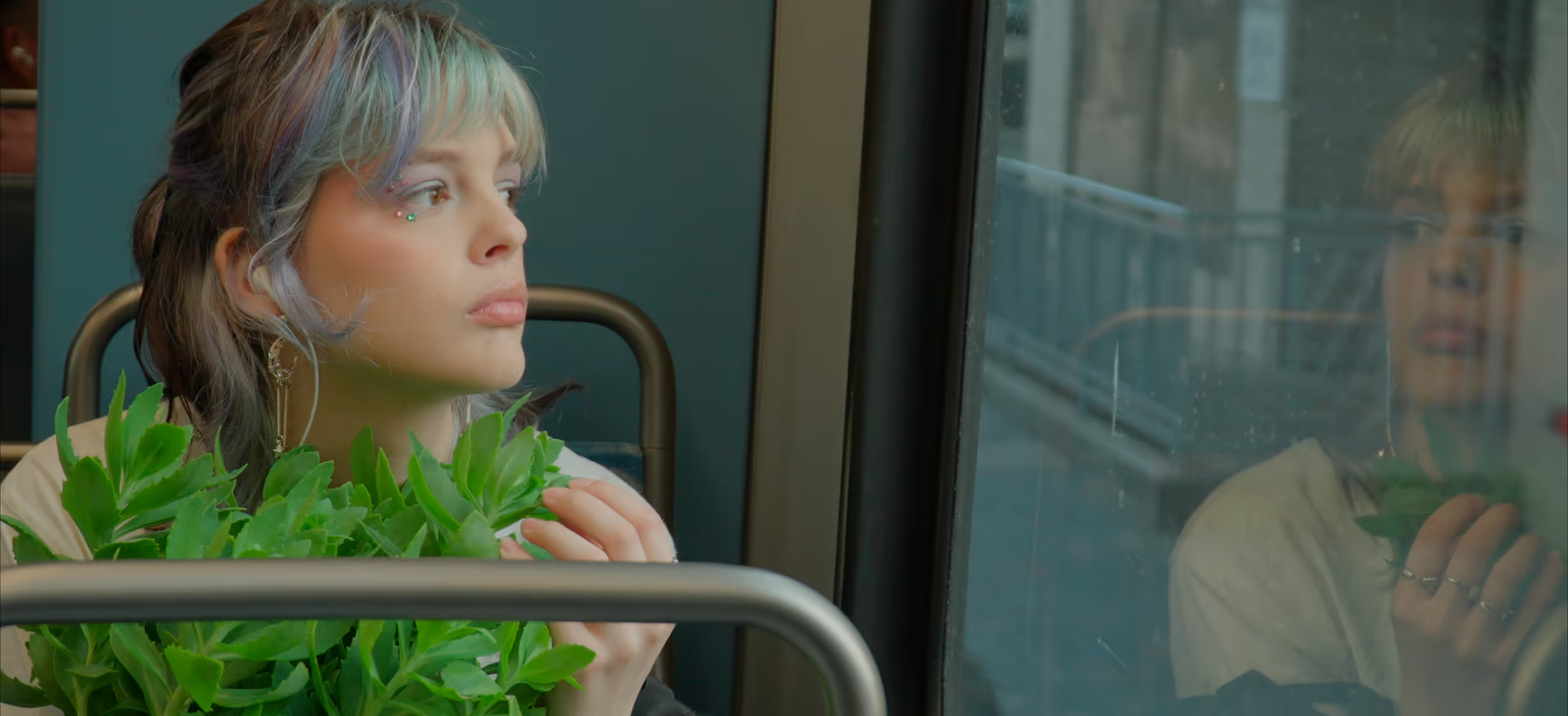
Layering subjects allowed us to create depth without expensive lenses. Foreground elements like grass, railings, passing figures gave dimension to otherwise simple frames. Negative space became emotional space. By isolating our protagonist against the vast Pittsburgh skyline, we let the city amplify solitude.
When filming in public, (most) people are kind to you and would not enter your frame. What was funny about one of our shots is we had to encourage people to enter the frame and walk across it so we can encapsulate the hustle and bustle of the city, without needing extras.
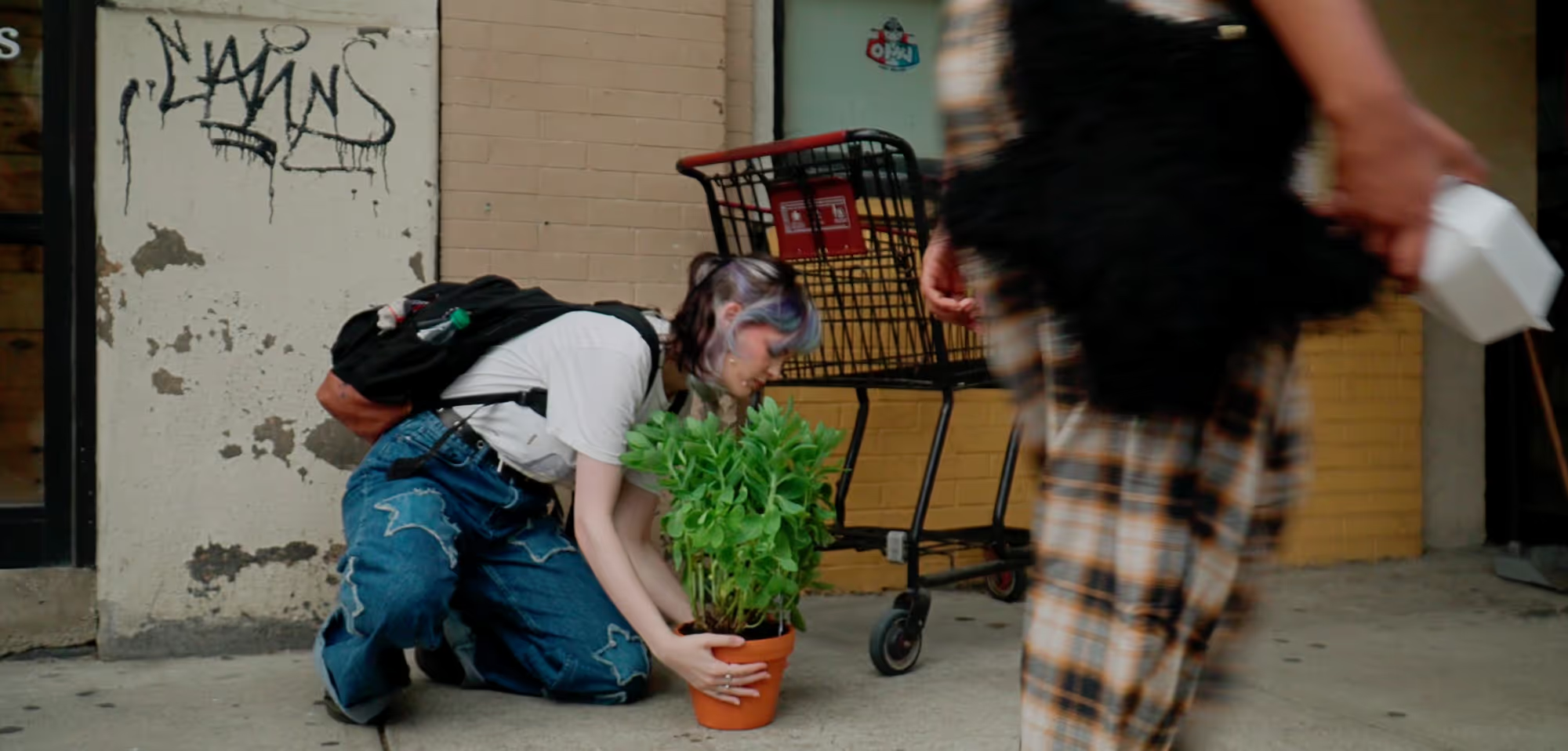
This was visual problem solving in real time. Cinematography on a budget forces you to see structure, symmetry, and tension in places others overlook. That’s where cinematic shots are born.
When we embarked on this run-n-gun style filmmaking, we knew that we would not be able to capture the smoothest motion. But that allowed us to let the camera movement not be about smoothness, but about feeling present with the character. We allowed the handled feel of the shots to emulate the emotions our protagonist was feeling.
Instead of chasing perfection, we chased perspective. Subtle body stabilization, controlled breathing, planted steps. If the character felt unstable, the frame reflected it. If the moment required stillness, we locked in.
In low-budget independent filmmaking, camera movement becomes psychological. It’s not about equipment, it’s about alignment with the story.

In Plant, the city of Pittsburgh wasn’t just a backdrop. It was a visual language we chose to embrace. The texture of brick. The industrial shapes of steel. The steep streets cutting through light and shadow. Natural tones that felt gritty, grounded and honest – just like the city.
Filming in Pittsburgh meant embracing the urban atmosphere as production value. The skyline gave scale. The parks gave reflection. The hills gave elevation; literally and emotionally.
When you approach a city this way, indie film cinematography becomes collaborative. The location shapes the frame before you even lift the camera.
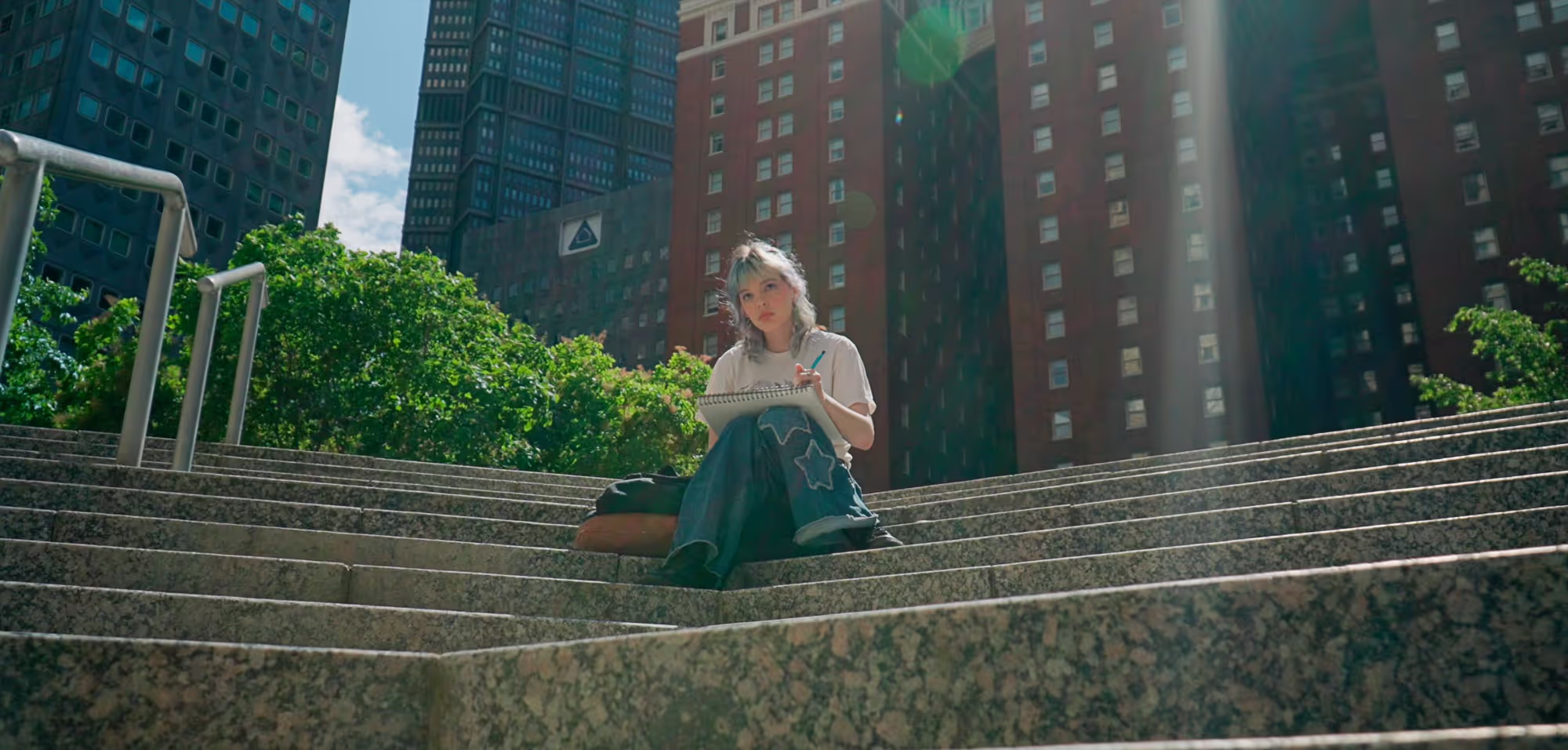
As a cinematographer, here is my strategy for how to make the most of a one day shoot when making a short independent film, guerrilla style.
But the really neat thing about filming like this reveals a beautiful process of creating art for art sake. It naturally strips away the excess and reveals what actually matters in visual storytelling, and the short film itself. I’ve really enjoyed this process, and hope you do too!
With zero budget for equipment or set design, cinematography stopped being about gear and started being about choices; where to place the camera, how to shape natural light, and how to find cinematic texture in real locations. The goal wasn’t to imitate big productions. It was to prove that iconic images can come from constraint, not despite it.
Because what you do have is your creativity, agility, and a whole lot of luck (hopefully).
You can pivot. You can steal a reflection instead of building a set. You can turn harsh noon light into something honest. You can let a passing train, a gust of wind, or a shadow on brick become part of the narrative instead of an obstacle. Constraint stops being a limitation and starts becoming a collaborator.
At Weekend Studios, we believe creativity doesn’t wait for perfect conditions. As a cinematographer, that means learning to see iconic images inside ordinary spaces. The idea behind the studio has always been simple: creativity doesn’t need a full-time schedule—only dedication and vision. Making the short film Plant in Pittsburgh pushed that philosophy into practice. Every frame had to earn its place. Every shot needed intention. And every second with sunlight counted.
This is the story of how we approached cinematography on Plant and how a single day of shooting taught us that visual storytelling begins long before you hit record, and does not have to end when you don’t have fancy lenses, lighting rigs, or set to begin with.